🌱 Little voices.
Big world. 🌎
A Mandarin immersion playgroup for children ages 1-4. Research-informed. Play-based.
The Language Nook brings native and heritage Mandarin-speaking instructors and research-grounded curriculum into a play-based setting where language learning happens the way it works best for young children: through songs, movement, and joyful repetition.
Two ways to join us.
Community playgroups. Open to any Athens family. You are in the room, on the floor, playing alongside your child and picking up a little Mandarin yourself along the way. Community pop-up playgroup schedule updated on our website. Fall 2026 dates will be updated soon!
Playgroups at your child's school. Sessions run during the regular school day at our partner sites, so your child gets Mandarin without one more thing on your calendar. Now enrolling for fall 2026 at The Goddard School Athens. Goddard families ➡️ register at: thelanguagenook.com/goddardathens
No Mandarin experience needed. Just bring your curiosity and your playful spirit.
📍 Athens, GA · The Classic City
✉️ hello@thelanguagenook.com
Upcoming Playgroup Dates
Why Mandarin
Around 940 million, which is more than the native speakers of English and Spanish put together.
Mandarin is not a niche choice. It is the largest one there is.
Still, none of that is why we start this young. At this age, what matters is sound.
What makes Mandarin hard for English speakers is not the grammar, which is simpler than Spanish or French in several respects. It is the tones, and sounds English does not use. Those are the things that get harder with age and easier the earlier a child hears them. An adult learner spends years training an ear to hear the difference between the tones. A two year old is still doing that work automatically, without being taught.
There is also nothing to read yet. At this age Mandarin is entirely listening and speaking, so the character writing system, the part that intimidates most adults, is simply not in the picture. Your child gets the hardest part of Mandarin during the years it comes most naturally, and the written language can wait until they are ready for it.
More people speak Mandarin as a first language than any other language on earth.

Who Leads Sessions
Every session is led by a Lead Instructor, a fluent or heritage Mandarin speaker who runs the whole session in Mandarin.
All instructors are background-checked before their first session and trained on child safety protocols and our curriculum.
The Language Nook carries its own general liability insurance covering all program activities.
What is the Playgroup Like?
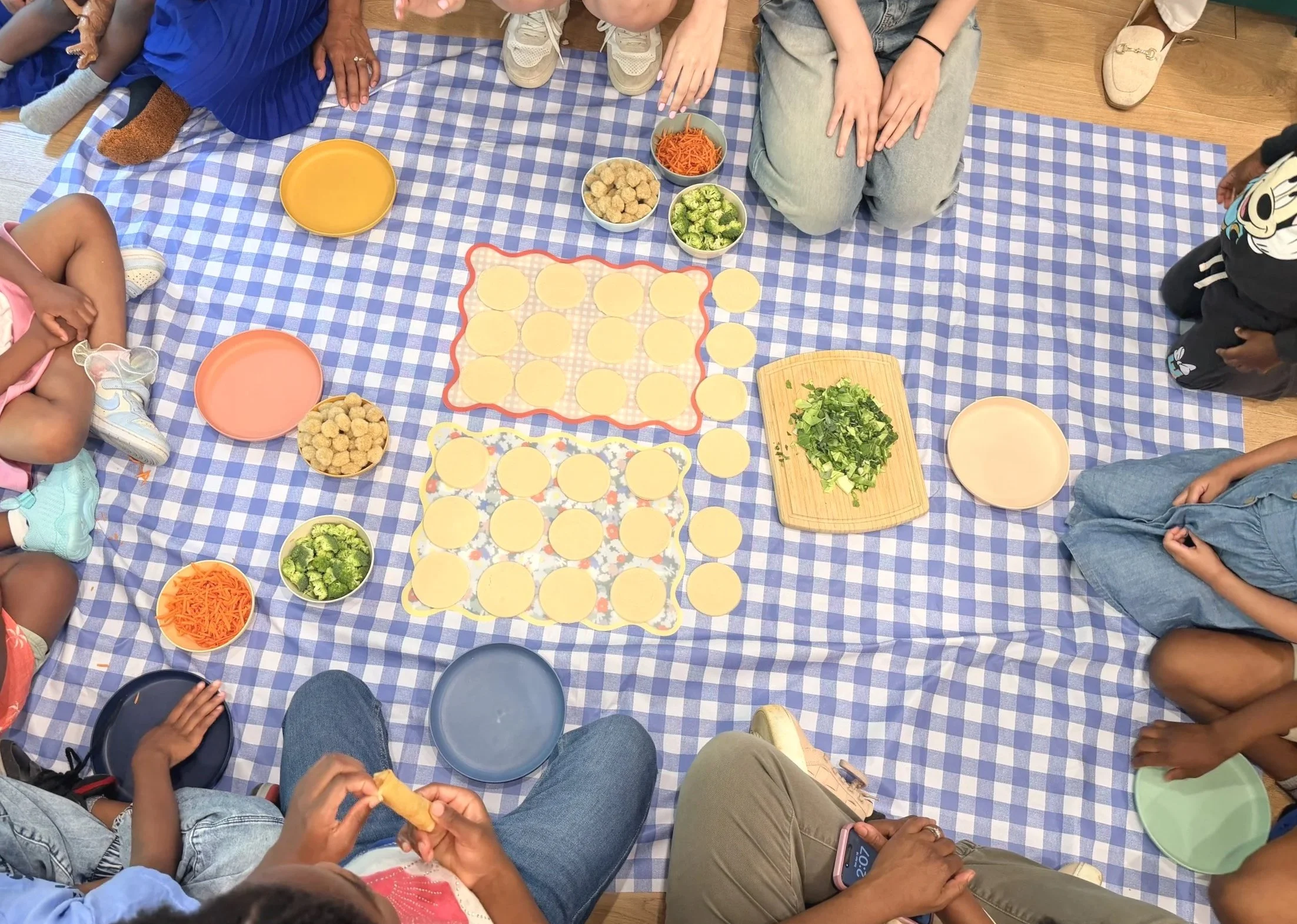
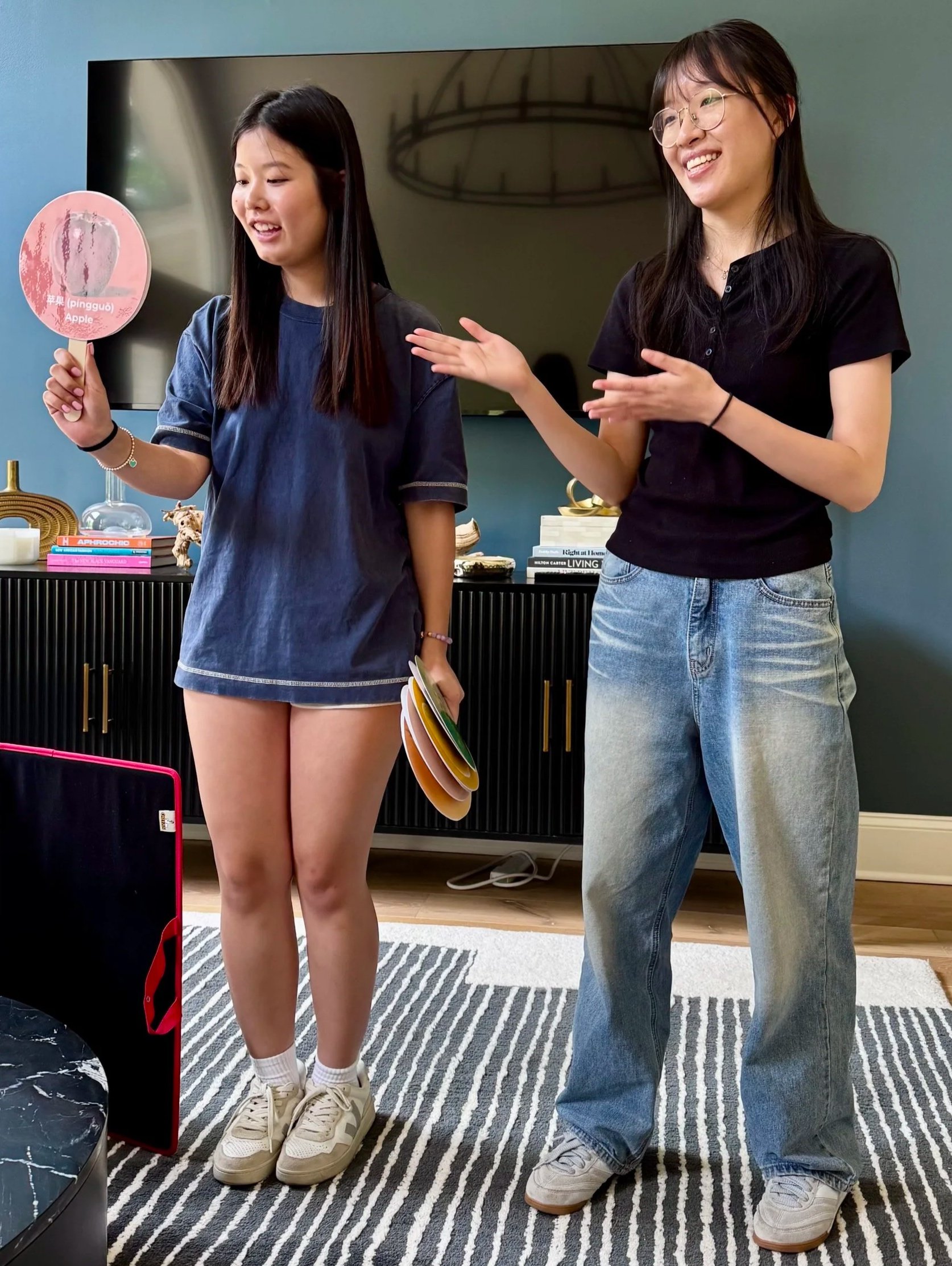
Each session is 45 minutes : 30 minutes of guided, play-based immersion followed by 15 minutes of open play. Sessions are led in Mandarin by native and heritage-speaking instructors and follow the same shape week to week, so children and grownups always know what to expect.
🎵 Songs and play. Rhythm and repetition make new sounds easier for young children to notice and hold onto. Children meet Mandarin through songs, movement, and sensory play.
💬 We play with the words. Guided vocabulary play and a hands-on activity. The same words show up in several different formats within a single session, so children meet each one in more than one context. We also incorporate interactive reading to bring story time to life.
👨👧 Built for how your child joins us. At community playgroups you are in the room, playing alongside your child. At school-based playgroups your child is with their teachers and our instructors during the regular day, and you get every song, every word, and the take-home activity.
🗣️ No Mandarin experience needed. Most of our families have none. That is who this is built for. We also welcome fluent speakers as well!
🎓 Research-informed. Curriculum decisions are grounded in second language acquisition and early childhood development research. Naturalistic exposure, not pressure or performance.
🎁 Take it home. Every monthly theme comes with two take-home pieces, a Parent Resource Card with that month's vocabulary and songs, and access to a private playlist of session recordings so Mandarin keeps going between sessions.
Hi, I’m Casey
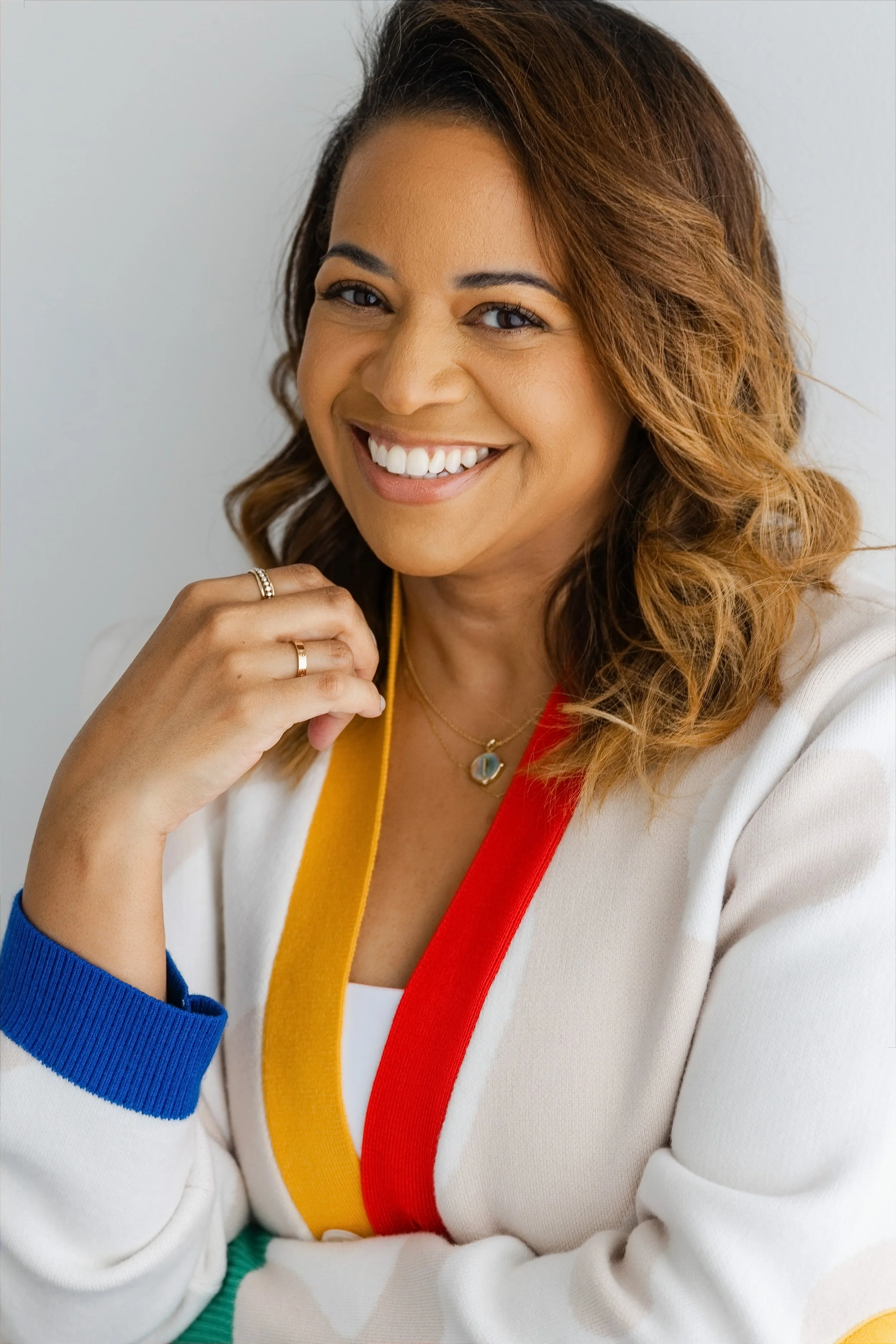
First time mom, former professor, founder of The Language Nook.
I started The Language Nook at 3am, feeding my daughter and searching for a Mandarin program that did not exist.
I do not speak Mandarin. I always meant to learn and never did, and by the time I got serious about it, it felt like I had waited too long. I did not want that for her.
My PhD is in communication and organizational science and teaching college students, so early language acquisition was never my field and working with toddlers was never my plan. What actually happened is that my daughter did not sleep, and in those long 3am stretches I started reading second language acquisition research on my phone, the way any determined, sleep-deprived mother does.
What I could find for an actual toddler was either built for much older kids or built around drills and screens. And I did not find a local Mandarin immersion daycare program in Athens. So I built the thing I had been looking for, around what the research kept coming back to: play, songs, repetition, and no pressure on a child to perform.
I am a researcher and an educator at heart, so I am always looking for better evidence and simpler ways to help families build language-rich homes without having to speak Mandarin themselves. And because this began with my own daughter, everything gets tried out on a rambunctious and easily distracted toddler first, in my living room, on the drive to school, in the bathtub, before it ever reaches your family.
I am also the person who reads every email that comes to hello@thelanguagenook.com, so ask me anything.
I hope we get to have your child in The Language Nook!
-
With regards to our school-based program, on its own, 45 minutes a week is exposure. What makes it add up is the other six days, and The Language Nook builds that for you.
Each theme runs four weeks, so your child hears the same songs and words again and again in a setting they know. In between, you get a hands-on anchor activity and a simple print-and-go one, roughly every other week, a Parent Resource Card with the month's vocabulary and a few prompts, and a private family page with recordings of every song and word in the program.
That means Mandarin can show up at dinner, in the bath, in the car, in the two minutes before bed. At this age, a little every day goes further than a lot once in a while. Ten seconds of a song on the drive to school, five days a week, does more than any single session can on its own.
None of it asks you to speak Mandarin. The prompts are short, the recordings handle the pronunciation, and you use them alongside your child rather than teaching them. And if Mandarin is already spoken in your home, use the songs and vocabulary as a starting point and build out from there.
-
Community playgroups. You are in the room, on the floor, playing alongside your child and picking up a little Mandarin yourself along the way.
Playgroups at your child's school. Sessions run during the regular school day at our partner sites, so your child gets Mandarin without one more thing on your calendar.
-
Not at all. That is who this is built for. Most of our families start with no Mandarin at home, and the whole program assumes it.
And if Mandarin is already spoken in your home, your child is just as welcome. Heritage families use the playgroup differently, as a place where the language shows up outside the house, with songs, books, and other children. Both kinds of families are welcome here! -
No, and this is one of the most common worries we hear, so it is worth answering carefully.
Growing up with more than one language does not confuse children or delay their language development. Children raised with two or three languages reach the same broad milestones as children raised with one. Mixing languages inside a single sentence, which often worries parents most, is normal and is a sign of skill rather than confusion. Your child is drawing on everything they have!
Bilingual children sometimes know fewer words in one particular language early on, while their total vocabulary across all their languages tracks right alongside their peers. Those single-language gaps typically close.
Your home language will also stay dominant, because that is where nearly all of your child's language input comes from. Forty-five minutes a week plus songs in the car adds a language. It does not compete with one.
If your child has a diagnosed speech or language delay, additional language exposure does not cause it or make it worse. Your speech-language pathologist knows your child, and we defer to them on anything clinical. If there is something they recommend that would help your child in a session, tell us and we will build it in.
-
Very normal at this age, and the format is designed for it. Some children sing along in their first playgroup, some watch from the edge for awhile and then surprise everyone. Both are learning. We never push a child to perform.
-
This is an early foundation, not a fluency program. What we build is the ability to hear and produce Mandarin sounds and tones, comfort with the language, and the beginnings of vocabulary. Those are the things that make real Mandarin learning accessible later on, and this is the age when they come most easily. Very young children are still sensitive to sound and tone differences that adults stop noticing, and that sensitivity narrows toward the languages a child hears regularly. Regular Mandarin now means the sounds and tones stay familiar rather than becoming foreign, which is a real head start whenever formal study begins.
-
Email Casey Pierce, Founder & Director at hello@thelanguagenook.com